There have been a preponderance of excellent Doonesbury strips in the recent weeks (which I finally got around to reading over the weekend), here's a few highlights:
July 8: It's just a few dead-enders?
July 9: The situation has stabilized.
July 11: New Bush ad.
Sunday, July 18, 2004


Friday, July 16, 2004
Happy birthday to my SO!
It's my SO's birthday weekend, so yours truly is going to be busy wrapping presents, cursing online stores for their slow shipments, cooking meals, and just generally having fun for the next day or two. Of note are planned visits to the LA County Museum of Art and a trip to a county fair with friends (and maybe even kayaking if we can talk them into it).
I suspect one of the best presents I can give my SO is to not pay attention to my blog during the big day, and thus I'm officially signing off for a short while. Happy birthday!
I suspect one of the best presents I can give my SO is to not pay attention to my blog during the big day, and thus I'm officially signing off for a short while. Happy birthday!
It just gets worse
Seymour Hersh, author of the articles that brought Abu Ghraib to light (linked to here), gave a speech at an ACLU conference that provides even more details about the horror at that place:
That anyone can support an administration that allowed, and possibly even condoned, this torture is completely and utterly baffling to me. (via BoingBoing)
[Update July 20: BoingBoing has found some evidence that backs up Hersh's claims.]
"Some of the worst things that happened that you don't know about, ok. Videos. There are women there. Some of you may have read they were passing letters, communications out to their men. This is at Abu Ghraib which is about 30 miles from Baghdad [...]
The women were passing messages out saying, "Please come and kill me, because of what's happened," and basically what has happened is that those women who were arrested with young boys, children, in cases that have been recorded. The boys were sodomized with the cameras rolling, and the worst about all of them is the soundtrack of the boys shrieking that your government has. They are in total terror it's going to come out.
It's impossible to say to yourself how did we get there? Who are we? Who are these people that sent us there?" (from Daily KOS, with some minor editing based on the video)
That anyone can support an administration that allowed, and possibly even condoned, this torture is completely and utterly baffling to me. (via BoingBoing)
[Update July 20: BoingBoing has found some evidence that backs up Hersh's claims.]
Thursday, July 15, 2004
The greed of baby formula manufacturers
Pharyngula has a good post discussing how baby formula manufacturers are thwarting pro-breast feeding advertising campaigns in the US. I'd never much thought about baby formula or breast feeding until I took a class with Tobias Hecht, an anthropologist (and exquisite educator) who spent a number of years working with the street children of Brazil. He details his experiences in the book, "At Home in the Street: Street Children of Northeast Brazil," which I highly recommend (note: I haven't read the full edition of the book; I've only read excerpts of drafts).
One of the topics of Dr. Hecht's class was the politics surrounding baby formula in impoverished areas. Formula companies (most notably Nestle, as I recall) in these poor areas of Brazil would provide new mothers with a week or two of free baby formula (something US companies apparently still do, according to Pharyngula's post). The mothers, wanting to take advantage of this wonderful gift of western technology and medicine, fed their babies exclusively using this formula for a week or two. In that time the mother's milk would dry up, and thus when she ran out of formula she couldn't switch back to breast feeding. Since most people in the area were too poor to afford enough formula, they would instead either dilute down what little baby formula they could afford, or feed their babies rehydrated powdered skim milk or other medically disastrous foods.
There are definitely legitimate uses for baby formula. However, when formula companies actively seek out profits by giving new mothers just enough formula for their milk production to dry up, they're crossing the line into what should be criminal activity.
I introduce this history to students in some of my classes, and a common response is, "But the makers of baby formula add everything a baby needs to the formula, so it's probably even healthier than breast milk, right?" Unfortunately this is false, and the reasoning is simple. While we can identify the major components of the foods we eat (amount of protein, fat, vitamin C, etc.), we simply can't identify all the less abundant molecules that are present in our food, be it mother's milk or broccoli. We can't even identify all the specific proteins in the food item in question.
Since we don't know exactly what's in our food, it is impossible to test which specific molecules are important for growth and development, and thus it is impossible to know if we are adding everything we need for ideal growth and development to baby formula. Additionally, even when we identify important molecules, it can be nearly impossible to synthesize or duplicate biologically created molecules (e.g. antibodies, specific proteins) found in natural foods like milk. Certainly baby formula has been tested at an overall level, and children who are reared on formula appear to perform about as well as children who were reared on breast milk, but this still doesn't mean that baby formula contains everything it ideally should.
As an example, take something like a strawberry: there are more than 350 different chemicals in a single fruit that combine to give us the classic strawberry taste. There are probably countless thousands, if not tens of thousands, more unique molecules in an individual strawberry that we can't taste, and I'd wager that most of them have never been identified.
One of the topics of Dr. Hecht's class was the politics surrounding baby formula in impoverished areas. Formula companies (most notably Nestle, as I recall) in these poor areas of Brazil would provide new mothers with a week or two of free baby formula (something US companies apparently still do, according to Pharyngula's post). The mothers, wanting to take advantage of this wonderful gift of western technology and medicine, fed their babies exclusively using this formula for a week or two. In that time the mother's milk would dry up, and thus when she ran out of formula she couldn't switch back to breast feeding. Since most people in the area were too poor to afford enough formula, they would instead either dilute down what little baby formula they could afford, or feed their babies rehydrated powdered skim milk or other medically disastrous foods.
There are definitely legitimate uses for baby formula. However, when formula companies actively seek out profits by giving new mothers just enough formula for their milk production to dry up, they're crossing the line into what should be criminal activity.
I introduce this history to students in some of my classes, and a common response is, "But the makers of baby formula add everything a baby needs to the formula, so it's probably even healthier than breast milk, right?" Unfortunately this is false, and the reasoning is simple. While we can identify the major components of the foods we eat (amount of protein, fat, vitamin C, etc.), we simply can't identify all the less abundant molecules that are present in our food, be it mother's milk or broccoli. We can't even identify all the specific proteins in the food item in question.
Since we don't know exactly what's in our food, it is impossible to test which specific molecules are important for growth and development, and thus it is impossible to know if we are adding everything we need for ideal growth and development to baby formula. Additionally, even when we identify important molecules, it can be nearly impossible to synthesize or duplicate biologically created molecules (e.g. antibodies, specific proteins) found in natural foods like milk. Certainly baby formula has been tested at an overall level, and children who are reared on formula appear to perform about as well as children who were reared on breast milk, but this still doesn't mean that baby formula contains everything it ideally should.
As an example, take something like a strawberry: there are more than 350 different chemicals in a single fruit that combine to give us the classic strawberry taste. There are probably countless thousands, if not tens of thousands, more unique molecules in an individual strawberry that we can't taste, and I'd wager that most of them have never been identified.
Paint cans are opening
On Monday the drywall crew came back to texture the walls, but after texturing they "forgot" to reinstall the recessed wall-cabinet they'd removed last week. After a minor kerfuffle with the company (they said they didn't install cabinets; I said they were the ones who removed it in the first place) they finally came back out this morning and put it back up, patching the drywall around it. I suspect that my lack of payment to date was a motivating factor for them.
Yesterday night we primed the ceiling by the romantic glow of our halogen worklamp, and we should have the ceiling completely painted by tomorrow. We can't paint the walls until this new drywall patch dries, so wall painting will happen this weekend.
Yesterday night we primed the ceiling by the romantic glow of our halogen worklamp, and we should have the ceiling completely painted by tomorrow. We can't paint the walls until this new drywall patch dries, so wall painting will happen this weekend.
A red-letter day for Rhosgobel
The halls of Rhosgobel were filled with cheer yesterday as a record number of visitors crowded through the doors. By the end of Wednesday 136 visitors had come to look at more than 200 pages (210 to be specific), which shattered the daily record for this little space on the web and quadrupled the typical daily averages. The majority of referrals were from the Panda's Thumb, with Pharyngula coming in a strong second. Thank goodness I'd stocked up on appetizers.
Thanks both to everyone who contributed to the Tangled Bank and to all who stopped by to read it.
Thanks both to everyone who contributed to the Tangled Bank and to all who stopped by to read it.
Wednesday, July 14, 2004
Publishers and compensation
Along with all the remodeling and traveling that I've been doing this summer, I've also been working with a textbook publisher to help create supplemental materials for the upcoming release of a biology text. The work has been focused around two projects: writing test bank questions (as well as helping organize the test bank for the book) and helping create a lab manual to accompany the book. These projects both mesh well with my own teaching, as I can always use more test questions and I need some labs for my new course anyway.
However, one thing that's awkward about doing this work is the compensation. I like getting paid for my expertise, but I don't quite know what to say when the publisher talks about compensation and then asks, "Does this amount sound reasonable?" I don't necessarily feel undercompensated for the work I've done so far, but on the phone yesterday morning the publisher doubled my pay for one small portion of the project on the spot, without prompting from me, which tells me that compensation in this field is pretty flexible.
Additionally, they (the publisher and my lab manual co-author) want to incorporate some of my own labs into this new lab manual. I'm ecstatic that they feel my labs are good enough for inclusion, but I have no idea what kind of compensation to ask for or expect in return for the rights to the labs. They've said that they typically do up-front payments, but that they might consider other options (e.g. royalties). My completely uneducated leaning is that royalties would be better, but they haven't given me any hard numbers yet so I have no idea how to compare the options (or even what numbers to ask for so I can compare the options). Actually, I don't even know what my options really are (though part of me is tempted to just make the labs open-source). I somehow missed that "How to negotiate with publishers" seminar back in grad school; guess I'll be getting a fast lesson in it this summer.
However, one thing that's awkward about doing this work is the compensation. I like getting paid for my expertise, but I don't quite know what to say when the publisher talks about compensation and then asks, "Does this amount sound reasonable?" I don't necessarily feel undercompensated for the work I've done so far, but on the phone yesterday morning the publisher doubled my pay for one small portion of the project on the spot, without prompting from me, which tells me that compensation in this field is pretty flexible.
Additionally, they (the publisher and my lab manual co-author) want to incorporate some of my own labs into this new lab manual. I'm ecstatic that they feel my labs are good enough for inclusion, but I have no idea what kind of compensation to ask for or expect in return for the rights to the labs. They've said that they typically do up-front payments, but that they might consider other options (e.g. royalties). My completely uneducated leaning is that royalties would be better, but they haven't given me any hard numbers yet so I have no idea how to compare the options (or even what numbers to ask for so I can compare the options). Actually, I don't even know what my options really are (though part of me is tempted to just make the labs open-source). I somehow missed that "How to negotiate with publishers" seminar back in grad school; guess I'll be getting a fast lesson in it this summer.
Blog Survey
A group of CS graduate students at UC Irvine is looking for bloggers to take a voluntary blog survey. They even have a blog about their blog survey; how appropriate. (Via Pharyngula)
Tangled Bank #7

Before we get to the links, though, let me first introduce myself. I'm Radagast, and you're at Rhosgobel, my home on the web. Welcome. I teach biology at a California community college, and while my writing tends to lean towards my vocation (organismal biology and teaching) I also write about a number of more personal topics, including trips that I've taken and remodeling our house and landscaping. I just got back from a three-week-long trip to Canada and the Pacific Northwest; while on the trip I took a picture every hour on the hour, no matter where I was, and I'm currently in the middle of posting these hourly pictures (which explains the large number of pictures for those who look around; there usually aren't this many).
But enough blabber, let's get to the meat. I received six submissions by the time of this writing, and have one of my own posts to add, so we have a grand total of seven posts today.
- Ratty's "Slothy Dreams" post was the first submission of the week (let's all hear it for non-procrastinators!). Given that my SO and I have had more than 20 pet rats, Ratty immediately had my attention. The post is probably best described by the author: "It's not exactly what you'd call hard science, but it's got a giant Gambian pouched rat in it, some irritating stomach bacteria, and even some decidedly unscientific speculations about the dreams of sloths." About the only other thing you need know is that Stella is Ratty's giant Gambian pouched rat. As a side note for those curious about sloths, the U of Michigan Animal Diversity Web has good pages on both two-toed and three-toed sloths. I'll finish by seconding Valerie's motion (in the comments) that Ratty should illustrate this post.
- Pharyngula stole my thunder on Sunday evening by submitting his post "MADS boxes, flower development, and evolution". I had already started drafting a glowing post about this article, but after Pharyngula's submission I decided to hold off. The post introduces some developmental pattern-forming genes in plants (a topic I'd read nothing about before), draws similarities between them and Hox genes (their animal equivalents, which I've read much about), and then looks at what these genes say about angiosperm (flowering plant) evolution. It's an excellent piece of work, and is especially relevant for me since I'll be teaching a new course this fall that introduces and draws parallels between the biology of all kingdoms of life. Content from Pharyngula's post will definitely be finding its way into my lectures.
- In his post "10,000 + 1" Mike discusses how his team's goal of observing all 10,000 species of birds just became a little bit harder due to the discovery of a new species of owl, the Serendib Scops-Owl. Coming from the invertebrate side of zoology new species don't surprise me in the least (some folks argue that only 1-2% of all insect species have been formally identified to date), but new vertebrate species are relatively rare, so this is neat.
- Reagan's article title, "Renal Regulation of Blood Pressure", pretty much sums up his post. In my zoology lecture I introduce just about every organ system with, "This system is the neatest of all the body's systems because it can do X, Y, and Z," but when I introduce the kidney I really mean it. The kidney is possibly the most amazing organ of the body (except maybe for the brain; oh, wait, there I go again); it receives approximately 1.5 liters of blood a minute (~25% of our blood flow), and in a given day creates about 180 liters of filtrate. Not bad for an organ that makes up just about 1% of human body mass. Reagan's e-mail (and post) said he would be using this post as a springboard for future posts on the genetics of hypertension. I'm definitely looking forward to more!
- Jenn over at the Invasive Species weblog sounds like she's switching genres from biology to comic books with her post "Attack of the Killer Goldfish." The post neatly introduces one of the larger problems in conservation biology: how do you get rid of an invasive species without harming native ones? The post doesn't answer the question, and I'm not sure there is a good answer for all situations.
- S. Y. Affolee discusses a new strain of avian flu in "Additional Cents on the Flu", including a section on why these sick birds could mean big trouble for us humans in the future (and no, it's not that the birds will use up all of our Kleenex). Of note is that, from what I can tell, S. Y. Affolee is another anonymous biology blogger! Anonymous bloggers unite!
- And finally, some blogger named Radagast submitted the post "Carotenoids and vision" describing how the vitamins in carrots help us see and which carotenoids are common in free-range chicken eggs, among other things. Considering that this Radagast character didn't even bother to e-mail the link in, I hardly think it's worth my time to discuss the post further.
That wraps up this edition of the Tangled Bank. Thanks to all who submitted links, and especially to PZ Myers for organizing this whole endeavor.
If your post didn't make it into this week's edition, send your link to Reagan Kelly who will be hosting Tangled Bank #8 on July 28.
[Update: fixed link to S. Y. Affolee's post]
Tuesday, July 13, 2004
Don't delay: e-mail today!
Monday, July 12, 2004
Wolfwood in a Bush ad?
My SO just found this on an anime board: one of George W. Bush's recent ads uses a photoshopped compilation of anime images, most recognizably Wolfwood from Trigun, as a stand-in for the Yakuza.
Factcheck.org has done a very nice job analyzing the claims of both the Bush ad and the Kerry ad the Bush ad is responding to, so I won't deal with that here.
What I do want to look at, however, is the Yakuza image contained in the Bush ad. My SO and I both watch anime, and we were both shocked that a campaign would use anime art this way. We first read that the base image was of Wolfwood, but my SO quickly recognized the eyes as coming from Yu-gi-oh, so we trawled the net for likely source images.

Here's what we have gathered so far:
This is utterly unbelievable. First, this seems like copyright violation, something you'd think campaign ads would try to avoid. Second, I can't believe the Bush campaign would be so lazy as to quickly photoshop together three anime images to create a "Yakuza" image (done so poorly that even casual anime fans can figure it out). Did they think nobody would notice? Would it really have been that hard to have a new image drawn for the ad?
The images they've chosen are baffling. Using Wolfwood as the base image is ridiculous; I don't want to spoil Trigun for anyone, but he's certainly not a mobster (he's a priest who helps orphans, not to mention that he lives on another planet). Yami Yuugi is the spirit of an ancient Egyptian pharoh who's inhabiting the body of 16 year old boy. The combination of images they've used would be like combining the torso of Clark Kent, the eyes of GI Joe, and the nose and mouth of Wolverine and then using that image as an example of corrupt American businessmen. It just makes no sense.
We're also both rather offended by the ad, for a number of reasons:
1) This is plagiarism, plain and simple.
2) That they likely thought nobody would notice (or care about) their plagiarism strongly implies that they believe nobody of worth watches anime.
3) They've bastardized and misrepresented a character that we, and many other Trigun fans, love.
4) They seem to be using a Japanese mob organization as a punch line, which seems very inappropriate.
5) They are completely misrepresenting Kerry's positions.
And, finally, since this is plagiarism, and since George W. Bush approves this message, does this mean that our president now approves of plagiarism?
Here are links to the sources of the images I used:
Factcheck.org has done a very nice job analyzing the claims of both the Bush ad and the Kerry ad the Bush ad is responding to, so I won't deal with that here.
What I do want to look at, however, is the Yakuza image contained in the Bush ad. My SO and I both watch anime, and we were both shocked that a campaign would use anime art this way. We first read that the base image was of Wolfwood, but my SO quickly recognized the eyes as coming from Yu-gi-oh, so we trawled the net for likely source images.

Here's what we have gathered so far:
- The base character is certainly Nicholas D. Wolfwood from Trigun.
- The eyes are almost certainly from the character commonly called Yami Yuugi in Yu-gi-oh.
- The nose and mouth are likely from a character in Akira, though since neither of us has ever seen it or read it we don't know for sure. We found two images from Akira that contained noses and mouths that are extremely similar to the "Yakuza" in the ad, but while they're both close we don't think they're an exact match.
This is utterly unbelievable. First, this seems like copyright violation, something you'd think campaign ads would try to avoid. Second, I can't believe the Bush campaign would be so lazy as to quickly photoshop together three anime images to create a "Yakuza" image (done so poorly that even casual anime fans can figure it out). Did they think nobody would notice? Would it really have been that hard to have a new image drawn for the ad?
The images they've chosen are baffling. Using Wolfwood as the base image is ridiculous; I don't want to spoil Trigun for anyone, but he's certainly not a mobster (he's a priest who helps orphans, not to mention that he lives on another planet). Yami Yuugi is the spirit of an ancient Egyptian pharoh who's inhabiting the body of 16 year old boy. The combination of images they've used would be like combining the torso of Clark Kent, the eyes of GI Joe, and the nose and mouth of Wolverine and then using that image as an example of corrupt American businessmen. It just makes no sense.
We're also both rather offended by the ad, for a number of reasons:
1) This is plagiarism, plain and simple.
2) That they likely thought nobody would notice (or care about) their plagiarism strongly implies that they believe nobody of worth watches anime.
3) They've bastardized and misrepresented a character that we, and many other Trigun fans, love.
4) They seem to be using a Japanese mob organization as a punch line, which seems very inappropriate.
5) They are completely misrepresenting Kerry's positions.
And, finally, since this is plagiarism, and since George W. Bush approves this message, does this mean that our president now approves of plagiarism?
Here are links to the sources of the images I used:
- Yakuza ad: Bush homepage
- Trigun image: found in the Leola.net news section (dated 07/07/2004)
- Yu-gi-oh image: found on a fansite
- Akira images: image 1, image 2
Sunday, July 11, 2004
Molecular pathways involved in cancer
Nature Reviews: Cancer has published a very cool "subway map" of known molecular pathways involved in cancer. Specific genes in each pathway are shown as subway stops, and the major cell phenotypes required for cancer are "main stations" on the various lines. Each gene on the map has a link to a detailed description on NCBI's LocusLink, and the authors have also written summaries of each cell phenotype/pathway (the "main stations"); both of these are found by clicking on the gene/station name (note: this only worked in IE for me, not Firefox). The "main station" descriptions make a good starting point for exploring the map. (via BoingBoing)
This map reminds me of a class I took in graduate school where our entire goal was to look at all the proteins and other elements involved in one of the heat shock pathways and analyze the interactions between them. On the first day of class we got a rough draft of a regulatory diagram much like the subway map above, and then spent the course trying to improve it based on primary literature and logic. What made it really enjoyable was that this wasn't an exercise where a better diagram was already known; the draft diagram we had was the best information the instructor had at the time.
This map reminds me of a class I took in graduate school where our entire goal was to look at all the proteins and other elements involved in one of the heat shock pathways and analyze the interactions between them. On the first day of class we got a rough draft of a regulatory diagram much like the subway map above, and then spent the course trying to improve it based on primary literature and logic. What made it really enjoyable was that this wasn't an exercise where a better diagram was already known; the draft diagram we had was the best information the instructor had at the time.
Tangled Bank #7: Call for Submissions
I'll be the host of this week's Tangled Bank, and thus I'm currently looking for submissions.
The Tangled Bank is a biweekly compendium of blog posts that are related to biology, natural history, and medicine, and is largely submission-driven. If you've written a relevant post, even if it was your first and only foray into the topic, please send in a link and I'll add it to the issue. See the Tangled Bank homepage for more information.
I'll be posting Tangled Bank #7 this Wednesday, so please have your submissions in to me by 1am Wednesday morning (pacific time).
I hope to see your e-mails soon!
[updated 11am to reflect new e-mail information]
Saturday, July 10, 2004
June 14, 2004: Hourly Pictures
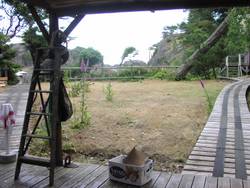
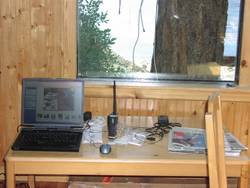
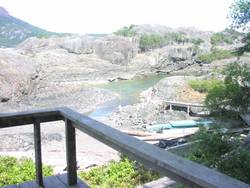
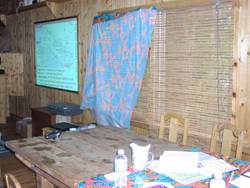
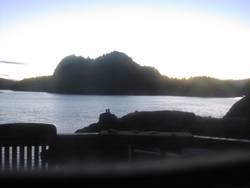
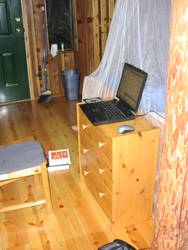
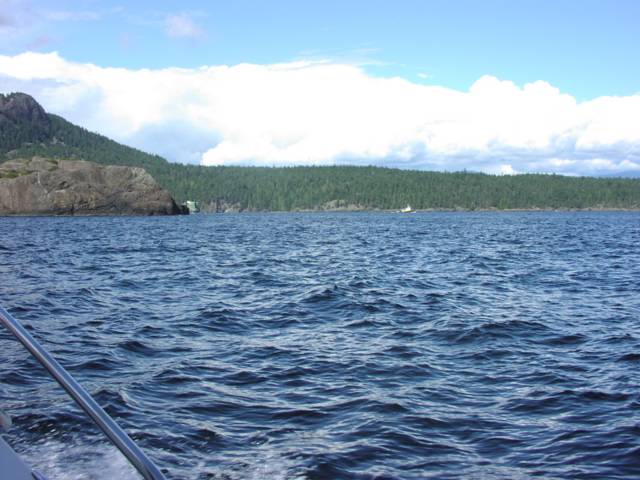
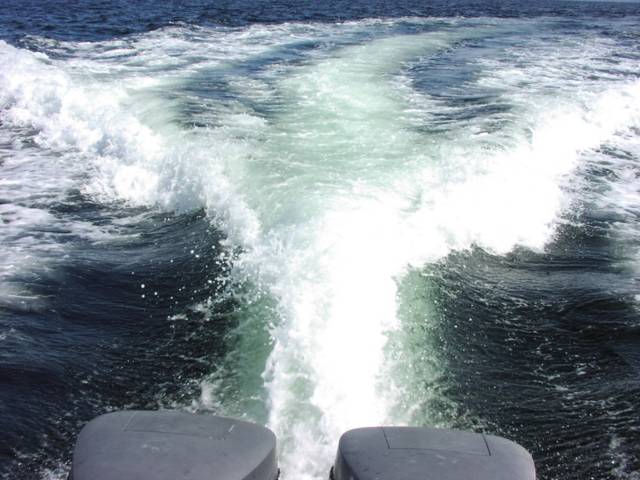
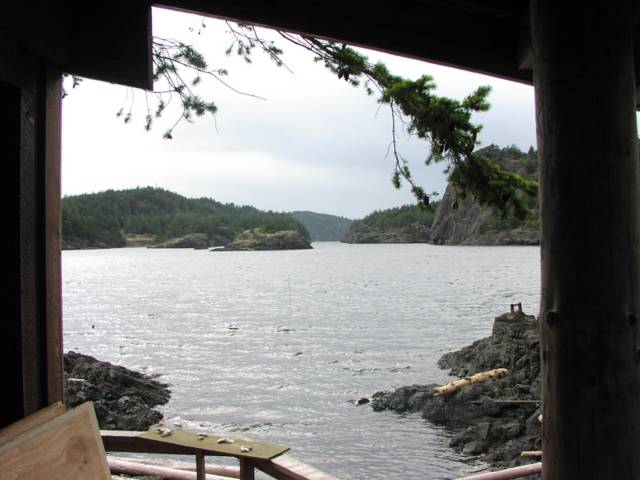
Today was our first full day on the island, and unfortunately here the travel log entries pause as I was rather busy on the island. Thus the text you're reading was written after the trip, not during it as with all the prior days. The hourly pictures continue, of course.
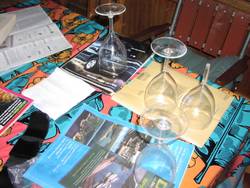
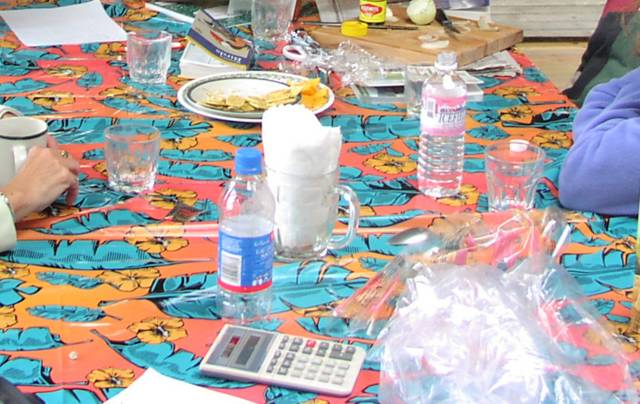
In the morning we went for a hike, and in the afternoon took a boat tour of some other islands in the region. We used a hydrophone to listen for marine mammals, and even though we didn't hear any we did get to listen to crabs and other invertebrates in shallow regions (unfortunately I didn't hear Sebastian singing). After dinner we had a lecture by one of my colleagues, and since I foolishly volunteered to give the next night's lecture I was up late preparing that. I decided to talk about mosquitoes (since they were trying to suck us dry), so my SO and I spent some of the evening using plastic wine glasses to catch mosquitoes for identification.


06-14-04: 0800
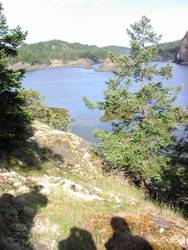
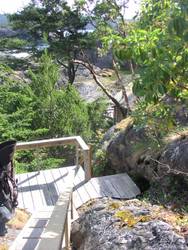
06-14-04: 0900
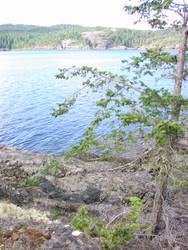
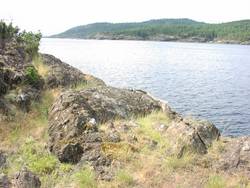
06-14-04: 1000

06-14-04: 1100

06-14-04: 1200

06-14-04: 1300
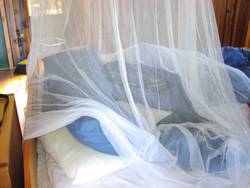
06-14-04: 1400


06-14-04: 1500
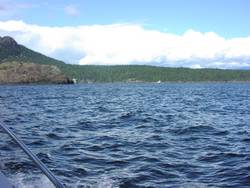

06-14-04: 1600

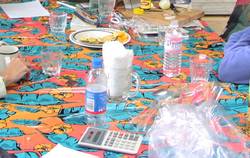
06-14-04: 1715
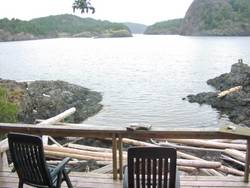
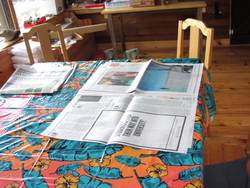
06-14-04: 1815
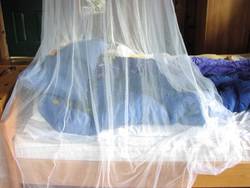

06-14-04: 1900
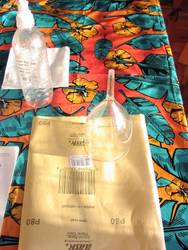
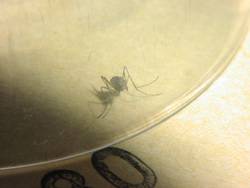
06-14-04: 2000

06-14-04: 2100
06-14-04: 2200

06-14-04: 2300

06-14-04: 2400
In the morning we went for a hike, and in the afternoon took a boat tour of some other islands in the region. We used a hydrophone to listen for marine mammals, and even though we didn't hear any we did get to listen to crabs and other invertebrates in shallow regions (unfortunately I didn't hear Sebastian singing). After dinner we had a lecture by one of my colleagues, and since I foolishly volunteered to give the next night's lecture I was up late preparing that. I decided to talk about mosquitoes (since they were trying to suck us dry), so my SO and I spent some of the evening using plastic wine glasses to catch mosquitoes for identification.


06-14-04: 0800
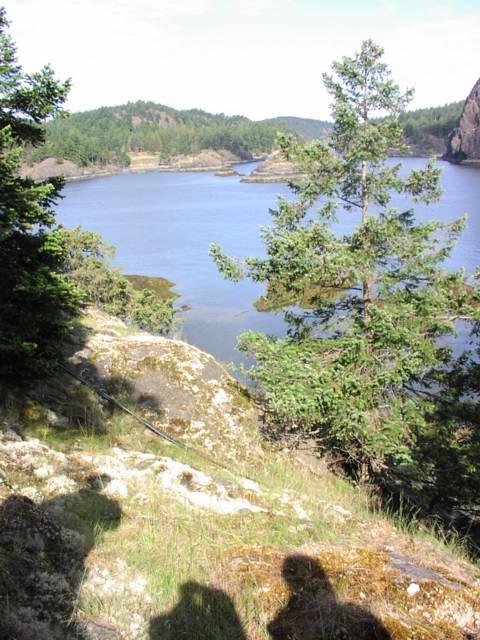
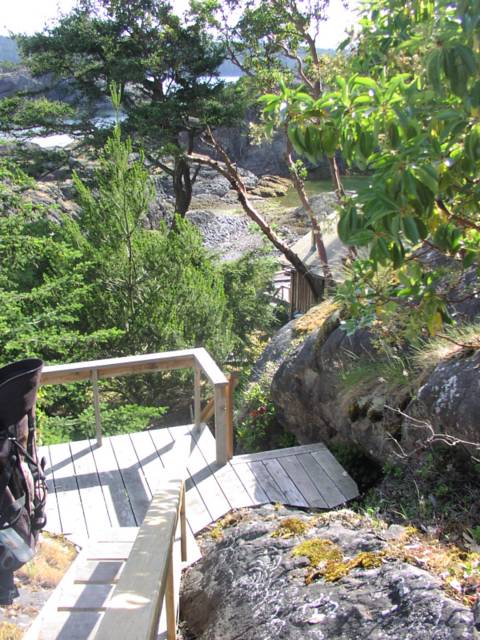
06-14-04: 0900
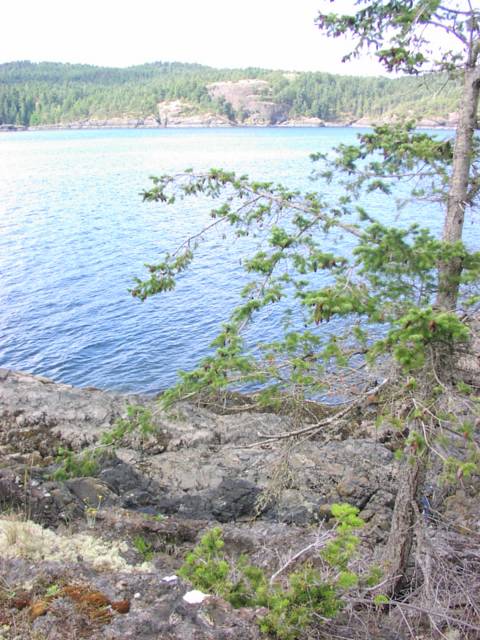
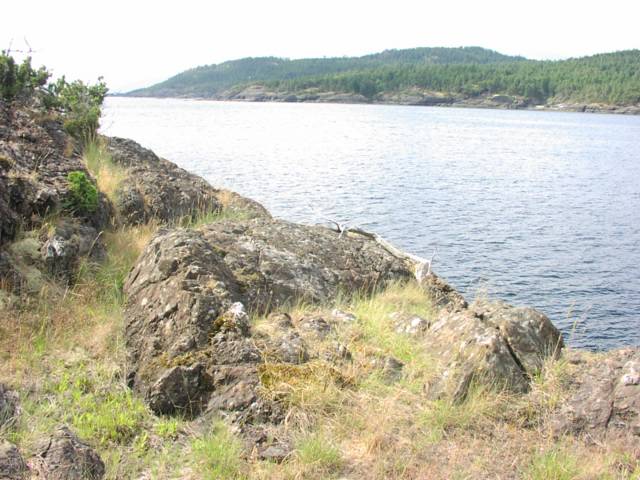
06-14-04: 1000
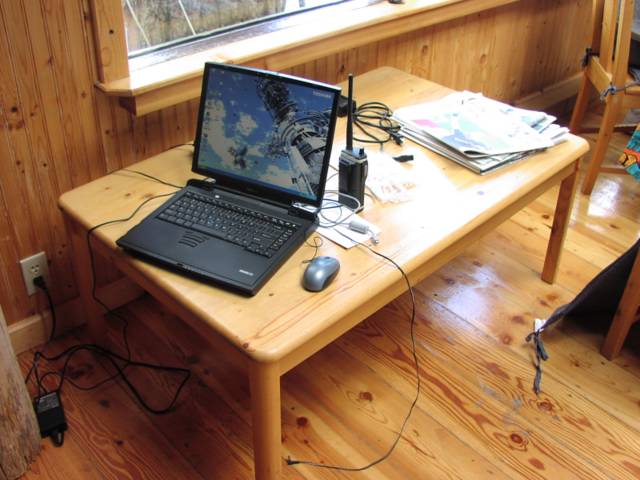
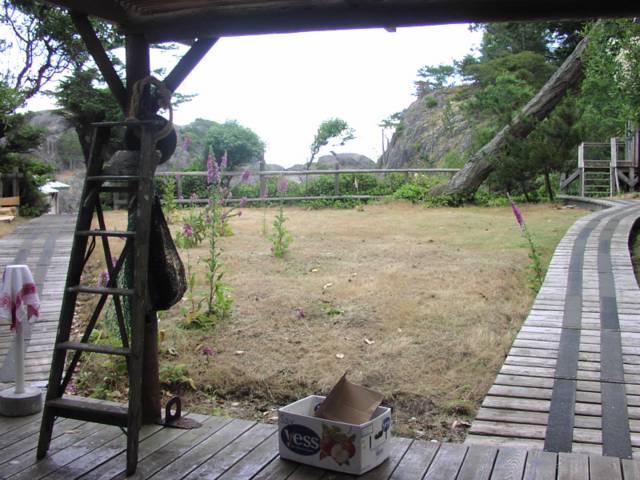
06-14-04: 1100
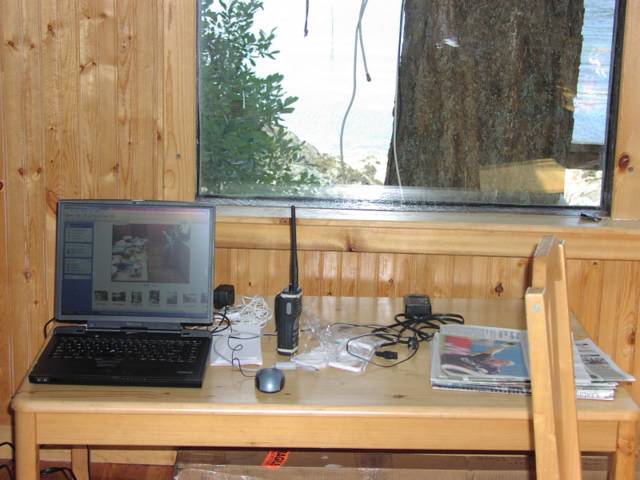
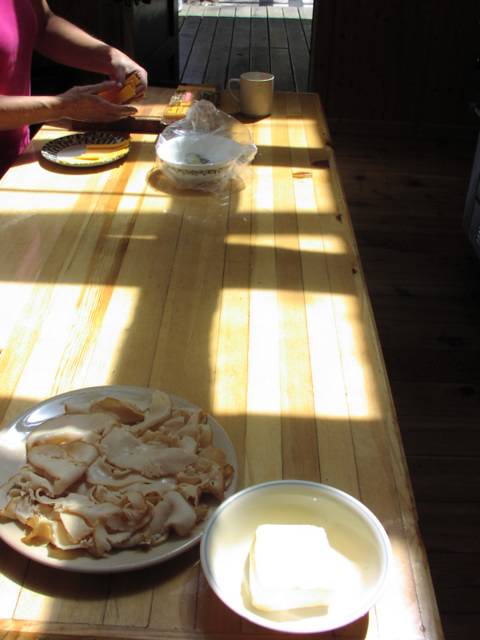
06-14-04: 1200
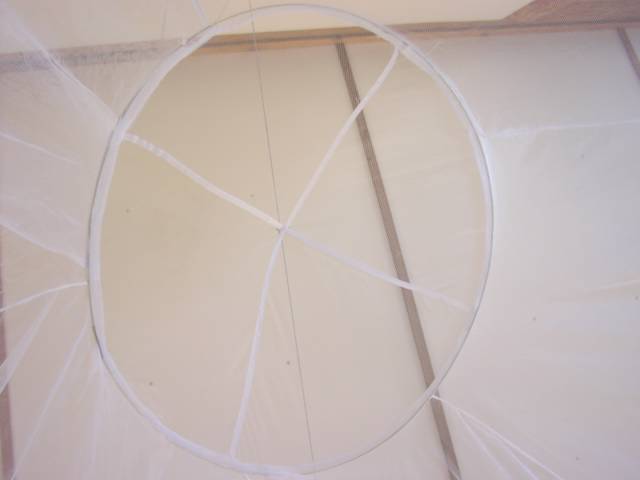
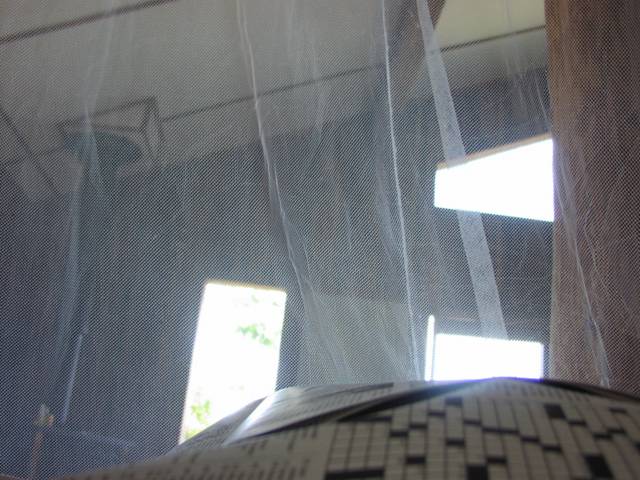
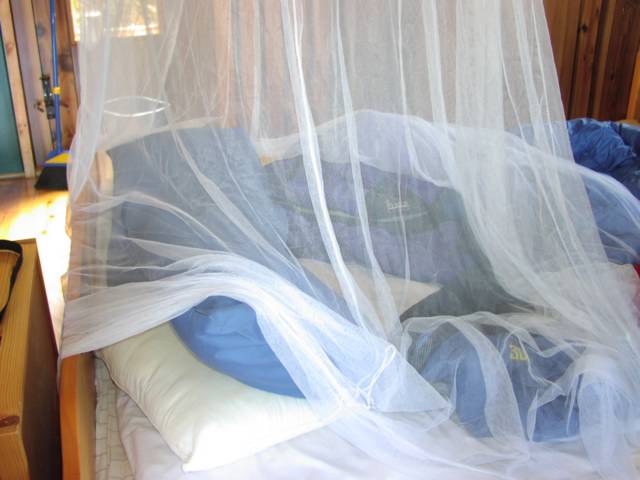
06-14-04: 1300

06-14-04: 1400
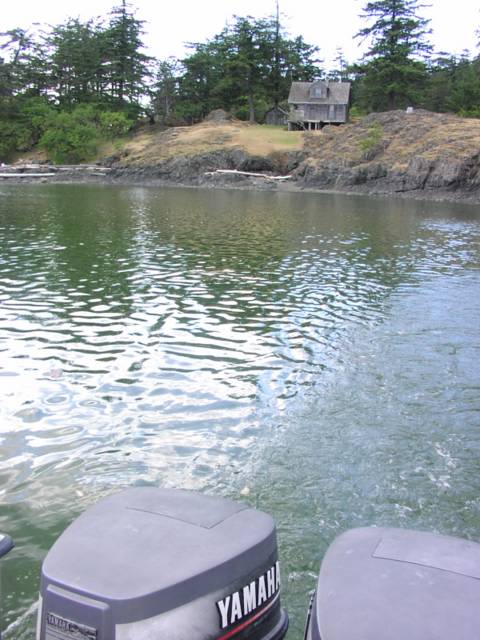

06-14-04: 1500
06-14-04: 1600
06-14-04: 1715


06-14-04: 1815

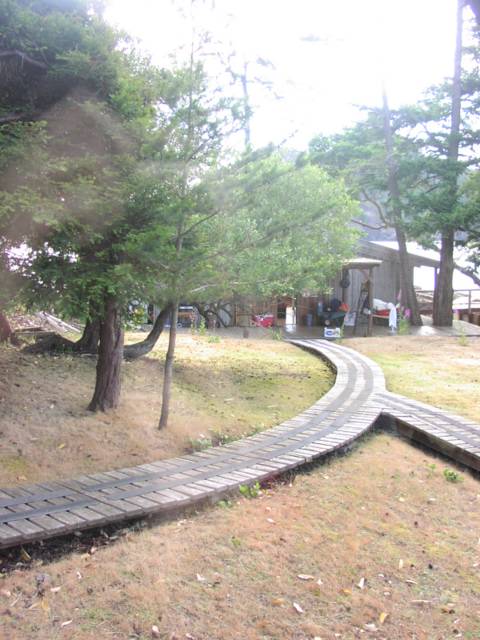
06-14-04: 1900
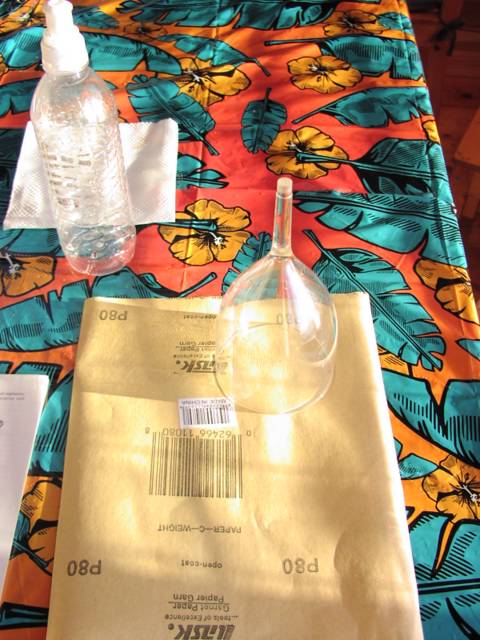
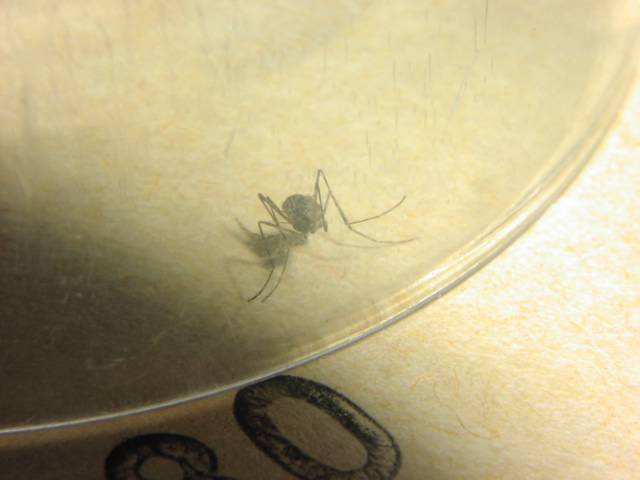
06-14-04: 2000

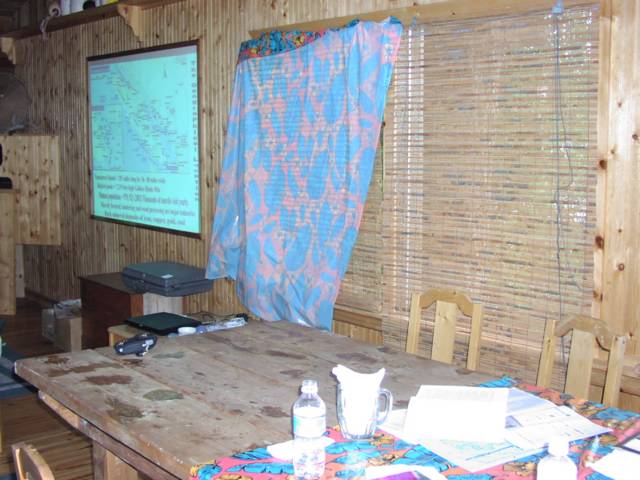
06-14-04: 2100


06-14-04: 2200
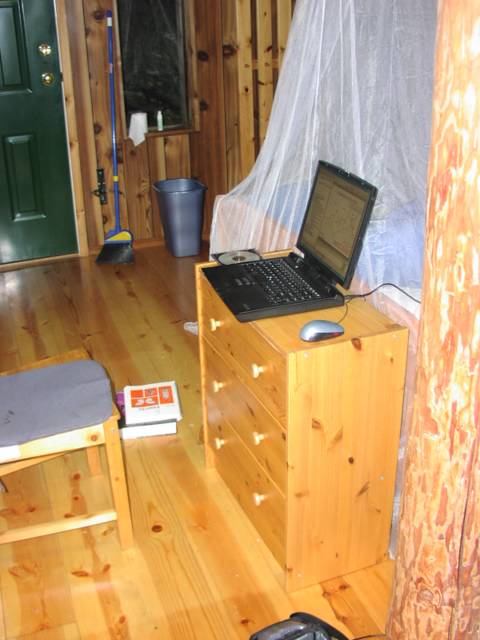

06-14-04: 2300

06-14-04: 2400
Subscribe to:
Posts (Atom)

 Posts
Posts


